
The Hantavirus: A Second Covid-19?

Key takeaways:
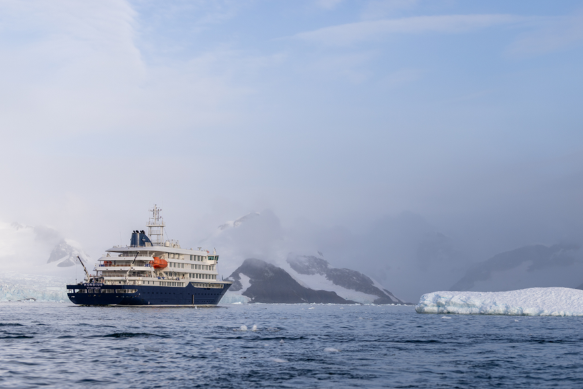
The Dutch MV Hondius cruise liner has seen several of its passengers become infected with Andes hantavirus (ANDV), a strain capable of spreading between humans.
ANDV is a highly lethal, rodent-borne orthohantavirus endemic to South America, primarily Chile and Argentina. It is globally distinct as the only hantavirus capable of person-to-person transmission.
So far, three individuals have died and 11 have been infected, with all passengers disembarking from the ship.
Communications between countries concerning the logistics and permissions needed to address, contain, and treat infected individuals have been difficult.
While fears of the virus have rekindled fears about a global pandemic reminiscent of COVID-19, the possibility of lockdown measures being implemented is extremely low.
On 01 April 2026, the MV Hondius, a Dutch Polar Class 6 cruise ship, departed from Ushuaia, Argentina, with 114 passengers and 61 crew members. The ship has been linked to a hantavirus outbreak, originally traced back to a Dutch couple who have both since died and may have contracted it in the days before boarding the ship.
The vessel made several stops, including one at the island of South Georgia, Tristan de Cunha, and St Helena. During these stopovers, many people left the ship and a number of people boarded it, including six new passengers while the ship was moored at Tristan de Cunha. Some passengers have also taken flights since being exposed to the virus.
The original Dutch woman boarded a flight to Johannesburg on 25 April 2026 with Airlink, a South African carrier carrying 82 passengers. Individuals associated with the Dutch woman are currently deemed “contact cases”, with one being a French national who shared the flight to Johannesburg. Back on the boat, a number of individuals fell ill, including British, German, and Dutch nationals. As of today, three individuals have died from the infection, including the original Dutch couple and an additional German passenger.
Due to cramped living quarters and shared indoor spaces, the virus spread to several other passengers and crew members. Genomic sequencing confirms all cases stem from this single zoonotic spillover event.
The World Health Organisation (WHO) has issued a formal warning to 12 countries whose nationals were believed to have disembarked the MV Hondius at Saint Helena. The Director General, Tedros Adhanom Ghebreyesus, named the countries as the United States (US), the United Kingdom (UK), Turkey, Switzerland, Sweden, Singapore, Saint Kitts and Nevis, New Zealand, the Netherlands, Germany, Denmark, and Canada. Individuals showing symptoms or simply just linked to the virus are being quarantined in several countries, including the US and the UK, with one former passenger being treated at a Zurich hospital in Switzerland. The South African health ministry has had a harder time monitoring potentially infected individuals; concerns regarding the infection spreading have led it to track down 62 people believed to have been in contact with two infected passengers.
Fears of a lockdown?
At the time of writing, three individuals have died in total, with 11 confirmed cases. Fears of a second pandemic reminiscent of COVID-19 have led the international public to speculate about the possibility of new lockdowns being introduced. Indeed, several pharmaceutical stocks have increased since the news of a hantavirus outbreak emerged. Companies such as Modern, Inovio, and Novavax surged in early trading on 02 May 2026; however, no significant revenue opportunities could be drawn from the rise and it is largely sentiment-driven.
While the hantavirus is considered a serious disease with high-risk consequences, the public health risk is considered very low due to human transmission being rare, as noted by the WHO. Usually spread through rodents, the Andes strain of the hantavirus can spread through prolonged, close person-to-person contact. The reason why public institutions are taking extra precautions when dealing with infectious cases is due to the serious nature of the virus itself, not necessarily due to its transmissibility. Additionally, the risk that the virus may spread to European rodents and further infect people is also considered extremely low.
Assessment
The MV Hondius is currently docked in Tenerife, with all its passengers having disembarked. So far, the WHO has been very vocal about potential measures and risks associated with the virus, forming communication channels between different countries and institutions. For many, its activities are considered a redemption opportunity for the extensive criticisms it received for its response to COVID-19 and as a way to test its policy and response reforms after the 2020 pandemic.
In terms of state relations, the docking of the ship represents various interests. Initially, Cape Verde refused to allow the ship to dock, claiming it did not have the resources to evacuate the whole crew and passengers. Discussions were held about bringing it to Morocco, but the government also refused, instead directing it to Spain’s Tenerife. Tensions were also noted between the conservative Tenerife government and left-leaning Madrid.
Ultimately, the trajectory of the ship and its passengers is deeply political. States are also the most likely to evacuate their citizens and provide the resources to transport and treat them. While they have no legal obligation to do so, the precedents set forth and the reputational damage that could be caused are enough to encourage governments to prioritise their citizens over insurance or travel companies. Numerous consultative and collaborative mechanisms between states and private actors are nevertheless solicited, especially concerning transport and quarantine measures. This includes medevac planes, medical jets, biocontainment tools, quarantine facilities, and consular and logistical agreements.
Reputational costs can be seen across the board, but are not likely to last. Ushuaia, for one, has a fast-growing tourism industry which could potentially be harmed. If more information regarding the location of the origin of the virus contamination spreads, repercussions concerning the safety and attractiveness of the location for tourism may arise.
For the affected cruise ship line, Oceanwide Expeditions, a dip in interested passengers may manifest, especially as the company specialises in the South America - Antarctica region.
Nevertheless, the severity of the virus is nominal: it does not easily spread between humans and the possibility of an epidemic outside the so-far affected areas is extremely low. Concerns about the virus have been heavily inflated by the media, echoing fears six years after the onset of COVID-19.


